When the lights go out or you're miles from the nearest outlet, a reliable generator isn't just a convenience – it's peace of mind. And if you're exploring the sweet spot of portable power, chances are you've landed on the Champion 3500W Generator reviews and models. Champion Power Equipment has carved out a formidable reputation in this space, often praised for delivering consistent performance when it matters most.
But with several options on the market, how do you cut through the noise and find the 3500-watt Champion generator that truly fits your needs? Let's break it down, drawing on real-world experiences and expert insights, so you can make an informed decision without feeling like you need an engineering degree.
At a Glance: Key Takeaways for Champion 3500W Generators
- Reliability First: Champion generators are consistently lauded for their dependable performance, making them a top choice for emergency backup.
- Dual-Fuel Advantage: Many Champion 3500W models offer dual-fuel capability (gasoline and propane), providing flexibility and extended run times.
- Price vs. Value: While sometimes a bit more expensive upfront than budget brands, their reliability often translates to better long-term value.
- Feature Set: Expect solid core features, though some models might lack advanced options like remote start compared to certain competitors.
- Noise Levels: While Champion offers quieter models, some conventional 3500W units can be louder than smaller inverter generators.
- Made for the USA Market: Designed by Champion, with manufacturing typically occurring in China, similar to most other generator brands.
Why 3500 Watts? Finding Your Power Sweet Spot
A 3500-watt generator often hits a sweet spot for many users. It's powerful enough to handle essential home circuits during an outage, run an RV's air conditioner, or keep tools humming on a job site, yet it remains relatively portable and fuel-efficient compared to larger whole-house units.
Think of it this way: 3500 running watts (with a higher starting watt rating, often around 4000-4375W) can typically power a refrigerator, a few lights, a TV, and a microwave simultaneously. For an RV, it can comfortably run a 13,500 BTU AC unit along with other smaller appliances. It’s a versatile power output that bridges the gap between small recreational units and heavy-duty industrial generators.
Champion's Reputation: Reliability You Can Bank On
When you're dealing with power, reliability isn't just a marketing buzzword; it's non-negotiable. Champion Power Equipment has built its brand on this very principle. Across countless customer reviews and expert evaluations, their generators, including the popular 3500W range, consistently earn high marks for starting dependably and running smoothly when called upon.
This isn't just anecdotal. Owners frequently praise Champion for its low incidence of technical issues and robust build quality. Furthermore, if you ever do encounter a problem, Champion's customer support is often cited as helpful and responsive. This kind of consistent performance is particularly crucial for applications where power outages aren't just an inconvenience but a genuine disruption, like keeping vital medical equipment running or preventing food spoilage. Understanding how to use your generator safely and effectively is paramount, and you can find many generator safety tips to ensure you're always operating within best practices.
Unpacking Champion's 3500W Generator Models
Champion doesn't offer a single "3500W generator." Instead, they provide a range of models, each with slight variations in features, technology, and fuel types. Let's explore the key distinctions you'll encounter.
Conventional vs. Inverter: The Core Divide
The first big choice you'll face is between a conventional (or open-frame) generator and an inverter generator.
- Conventional Champion 3500W Generators: These are often the more budget-friendly option. They typically feature a robust open-frame design, making them durable for job sites or outdoor events. While powerful, they tend to be louder and produce "dirty" power, which isn't ideal for sensitive electronics unless you use a surge protector. They're excellent for tools, lights, and appliances that don't require perfectly stable voltage.
- Champion 3500W Inverter Generators: These represent more advanced technology. They produce "clean" sine wave power, making them safe for all your electronics, from laptops to smartphones. Inverter models are also generally much quieter and more fuel-efficient because their engines can adjust RPMs based on the load. The downside? They come with a higher price tag. If you're planning to power an RV or use electronics, an inverter model is usually the way to go. For more detail, exploring the advantages of inverter generators can help solidify your decision.
Dual-Fuel and Tri-Fuel Options: Champion's Specialty
One area where Champion truly shines is its commitment to diverse fuel options. Many of their 3500W models are dual-fuel, meaning they can run on both gasoline and propane. This offers incredible flexibility:
- Gasoline: Easy to find, offers maximum power output.
- Propane: Longer shelf life, burns cleaner, easier to store safely for extended periods, and often preferred for backup power because you can store large tanks.
The ability to switch between fuels on the fly is a significant advantage, particularly during extended power outages where gasoline might be scarce. Champion is also a leader in offering tri-fuel inverter generators, sometimes being the only quality option for this versatile setup (gasoline, propane, and natural gas). This level of fuel flexibility adds another layer of security and convenience. Understanding the benefits of a dual-fuel generator is key for anyone prioritizing versatility and preparedness.
Key Features to Look For (and What Champion Offers)
Beyond the basic power output and fuel type, a few features can significantly enhance your generator experience:
- Electric Start: Say goodbye to endless pull-starts. Many Champion 3500W models offer an electric start with a battery, making activation as simple as turning a key or pushing a button. This is a game-changer, especially in cold weather or for those with physical limitations.
- Portability: Even a 3500W generator can be heavy. Look for models with sturdy wheel kits and fold-down handles for easier transport. Champion models are generally designed with portability in mind for their class.
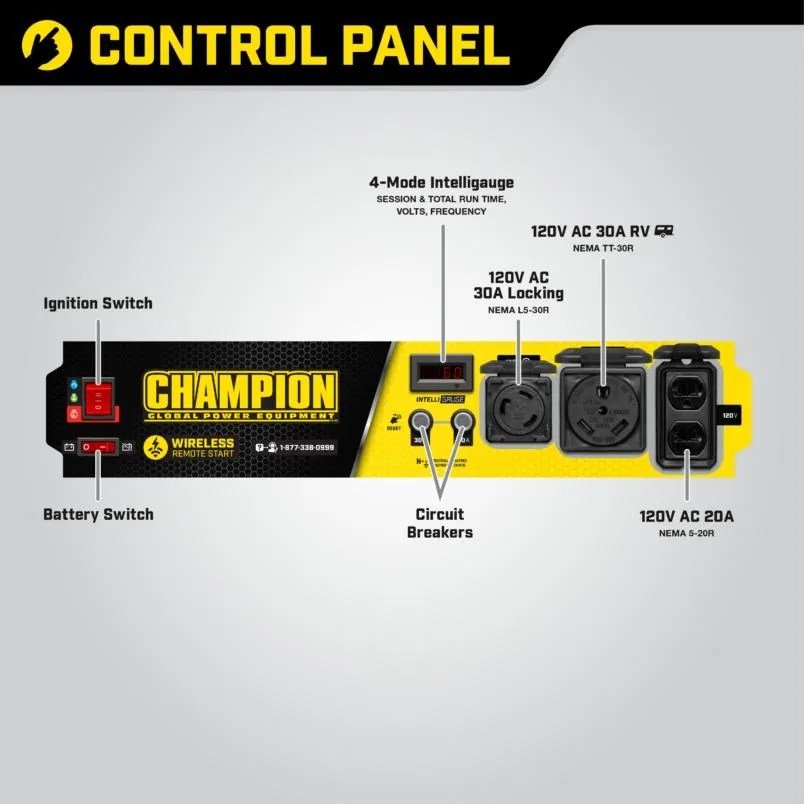
- Outlets: Ensure the generator has the right mix of outlets for your needs: standard 120V AC household outlets, a 120V RV-ready outlet (TT-30R), and sometimes even 12V DC for battery charging.
- Fuel Gauge: A simple feature, but incredibly helpful for monitoring runtime and planning refills.
- Low Oil Shut-Off: This vital safety feature automatically turns off the engine if oil levels drop too low, protecting it from damage.
- Cold Start Technology: Champion's specific technology helps ensure easier starts in chilly conditions.
Deep Dive: Popular Champion 3500W Models (Examples)
While specific model numbers can change, Champion typically offers a few distinct configurations around the 3500-watt mark that exemplify their lineup:
- The Workhorse Conventional: Often an open-frame model with strong running watts, a reliable Champion engine, and a focus on essential power. These are typically gasoline-powered but can sometimes be found in a dual-fuel variant. They prioritize raw power and durability for a competitive price.
- The Versatile Dual-Fuel: A very popular category for Champion. These models will often provide 3500 running watts on gasoline and slightly less (e.g., 3150W) on propane. They're an excellent balance of power, flexibility, and often include electric start for convenience. This is where Champion truly excels in giving users options.
- The Quiet Inverter: Aimed at RV users, campers, and those needing clean, quiet power. These 3500W inverter models will be fully enclosed, significantly reducing noise levels. They'll also be more compact and fuel-efficient. While they come at a higher cost, the benefits for sensitive electronics and peaceful environments are undeniable.
Choosing the right generator size, whether 3500W or another output, is a critical step, and you can explore more about how to choose the right generator size to ensure your choice aligns with your power demands.
The Real-World Lowdown: What Reviews Say
Customer feedback is invaluable, offering insights beyond spec sheets. For Champion's 3500W generators, a clear pattern emerges:
The Praises:
- "Starts Every Time": This is perhaps the most common compliment. Owners rave about the reliability, even after long periods in storage.
- Dual-Fuel Convenience: Many highlight the flexibility of switching between gasoline and propane as a major selling point, especially for emergency preparedness.
- Solid Build Quality: The generators are often described as robust and well-constructed, capable of withstanding various conditions.
- Good Value Over Time: While not always the cheapest upfront, the longevity and consistent performance make them a smart investment.
- Effective Customer Support: If issues arise, Champion's support team is generally seen as helpful and efficient.
The Criticisms:
- Noise Levels: Especially for conventional (non-inverter) models, some users find them louder than desired. While within acceptable limits for their class, they won't be whisper-quiet.
- Initial Price Point: Compared to some ultra-budget brands, Champion generators can command a higher price. However, this is often offset by superior reliability.
- Fewer Advanced Features (in some popular categories): Some 3500W conventional models might not include features like remote start, which competitors sometimes offer.
- Weight: While portable with wheels, they are still substantial pieces of equipment.
Champion vs. The Competition: Is the Premium Worth It?
This is the million-dollar question for many buyers. Champion generators are often seen as being "above average" in price, particularly in popular categories and for their smaller inverter models. So, when should you spring for a Champion, and when might an alternative be a better fit?
Choose Champion When:
- Reliability is Paramount: If you need backup power for emergencies (especially for critical items like medical devices or a sump pump), or if consistent power is vital for your RV or job site, Champion's proven track record is worth the investment. You want a generator you can trust to start and run when you need it most.
- You Value Fuel Flexibility: If dual-fuel or tri-fuel capability is a must, Champion is often a leader in offering robust and well-regarded options.
- Long-Term Value: While the initial cost might be higher, Champion's durability and lower incidence of issues often mean fewer headaches and repair costs down the line.
Consider Alternatives (like Westinghouse or WEN) When: - Budget is Your Primary Concern: If you're on a tight budget and need a generator for less critical uses (e.g., occasional camping, light-duty tailgating), brands like Westinghouse and WEN can offer a more budget-friendly entry point while still providing relative reliability, especially for smaller to medium inverter generators.
- Specific Advanced Features are a Priority: If you absolutely need features like remote start or app control, it's worth comparing specific models from other brands, as Champion might not always offer these in its more popular 3500W conventional range.
- Less Critical Use: For situations where a power outage is more of an inconvenience than a serious issue, and you're willing to accept a slightly higher risk of technical issues, a cheaper alternative might suffice. However, be wary of too cheap; reliability generally declines with price. For a deeper dive into the brand's full offerings and comparisons, our Champion 3500 watt generator hub is a great place to start.
It's important to remember that most generators, including Champion, are designed by companies like Champion Power Equipment but are typically manufactured in China, a common practice across the industry. This isn't unique to Champion and doesn't inherently speak to their quality.
Making the Right Choice: Your Decision Checklist
Ready to pick your Champion 3500W generator? Ask yourself these questions:
- What's its primary use?
- Home Backup: Reliability and dual-fuel capability are key. Consider an electric start.
- RVing/Camping: Quiet operation (inverter) and clean power for electronics are paramount. Portability matters.
- Job Site/Outdoor Events: Durability, raw power, and GFCI-protected outlets are important. Noise might be less of a concern.
- What fuel sources do you prefer/have access to?
- Gasoline only (most common)
- Gasoline and propane (dual-fuel for flexibility)
- Gasoline, propane, and natural gas (tri-fuel for ultimate versatility)
- How important is noise level?
- Very important (RVing/residential areas): Go for an inverter model.
- Less important (job site/rural areas): A conventional model might be fine.
- What's your budget range?
- Factor in not just the purchase price, but also potential fuel costs and maintenance.
- Which specific features do you need?
- Electric start, wheel kit, specific outlet types (RV-ready, 30A twist-lock), low-oil shutoff, fuel gauge, CO Shield technology (for carbon monoxide protection).
Beyond the Purchase: Setup, Safety, and Maintenance
Once you've chosen your Champion 3500W generator, remember that proper setup, diligent safety practices, and regular maintenance are crucial for its longevity and your peace of mind.
- Read the Manual: This might seem obvious, but it's the most important first step.
- Proper Placement: Always operate generators outdoors, far from windows and doors, to prevent carbon monoxide poisoning.
- Fuel Storage: Store fuel safely in approved containers.
- Regular Maintenance: Check oil levels, clean air filters, and change spark plugs according to the manufacturer's schedule. A good generator maintenance guide can walk you through the specifics.
Common Questions About 3500W Generators
How loud are Champion 3500W generators?
It varies significantly. Conventional 3500W models can range from 68-72 dB(A) at 23 feet, which is comparable to a vacuum cleaner or noisy conversation. Inverter 3500W models are much quieter, often in the 58-62 dB(A) range, similar to normal conversation or a quiet dishwasher.
Can a 3500W generator power a whole house?
Generally, no. A 3500W generator can power essential circuits (refrigerator, some lights, TV, microwave, furnace fan) but won't run central air conditioning, electric water heaters, or other large 240V appliances simultaneously. For whole-house backup, you'd typically need a larger generator (7,500W+) and a transfer switch.
What's the best fuel type for a 3500W generator?
The "best" depends on your needs.
- Gasoline: Most readily available, typically provides maximum power output.
- Propane: Cleaner burning, longer storage life, often preferred for backup due to easier, safer storage of tanks. Slightly lower power output than gasoline.
- Natural Gas: Only for tri-fuel models, requires a direct connection, very convenient for long-term outages if available.
Where are Champion generators made?
Champion Power Equipment designs its generators, but they are generally manufactured in China, like the vast majority of other generator brands on the market.
Your Power, Your Peace of Mind
Investing in a Champion 3500W generator is about more than just buying a piece of equipment; it's about securing your power needs for whatever comes your way. Whether it's keeping your home running during an unexpected outage, enjoying the comforts of an RV in the wilderness, or powering tools on a remote job site, Champion offers reliable, well-regarded options that consistently deliver. By understanding your specific requirements and weighing them against Champion's strengths and the market alternatives, you can confidently choose a generator that provides consistent performance and true peace of mind for years to come.