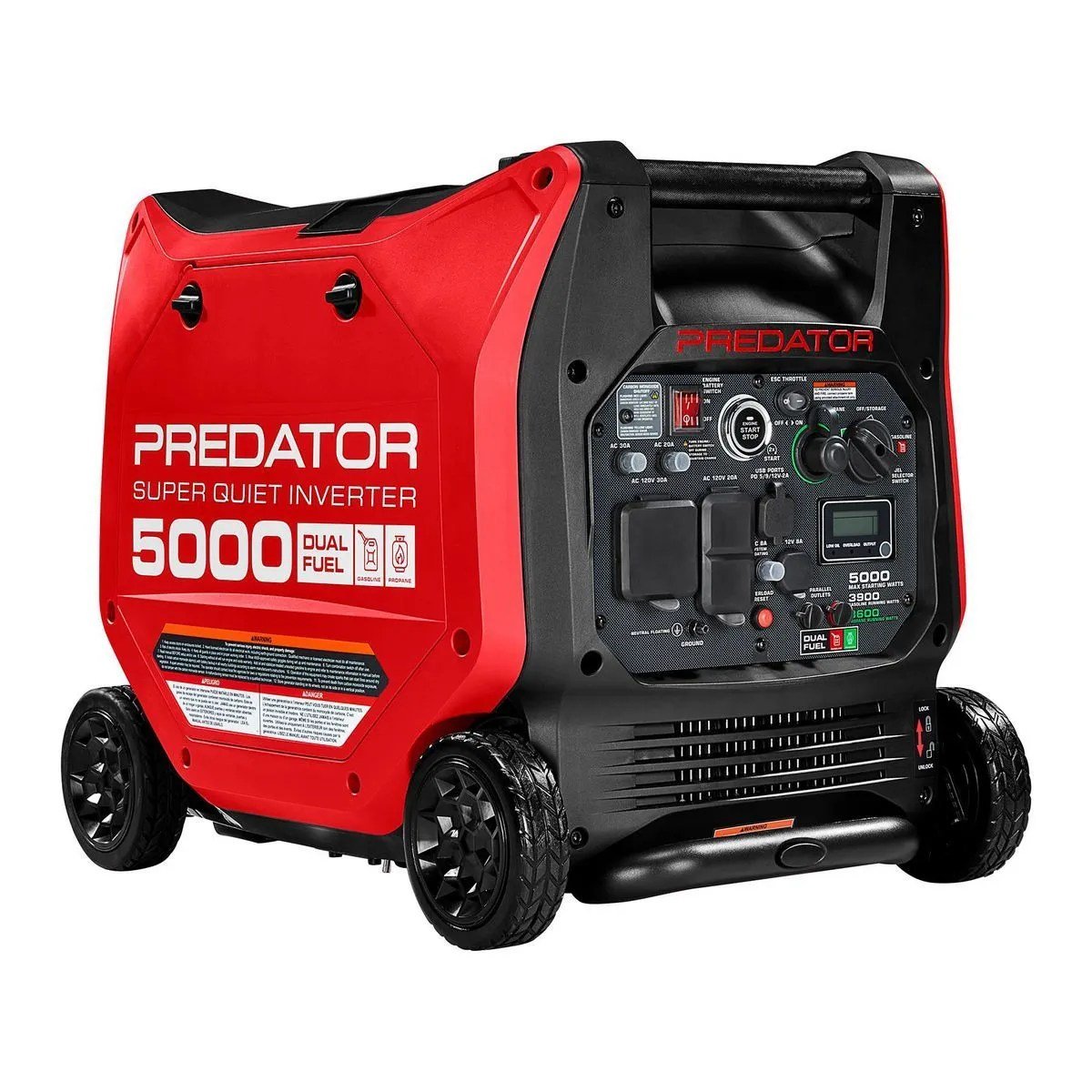
So, you’ve invested in a 3500-watt generator – a smart move for powering essential appliances during an outage or bringing reliable electricity to your remote projects. But merely owning the generator is just the starting line. To truly unlock its full potential, ensure unwavering safety, and extend its lifespan, you need the right companions: Essential Accessories for 3500 Watt Generators. Think of these as the supporting cast that transforms your workhorse into a well-oiled, efficient, and safe power solution.
It's not just about adding gizmos; it's about smart choices that protect your investment, your home, and, most importantly, your family. We're talking about everything from robust mobility kits to crucial safety devices and intelligent monitoring tools.
At a glance: Your Essential Generator Toolkit
- Prioritize official accessories: Always start with what your generator's manufacturer recommends for best compatibility and warranty protection.
- Stay mobile: Wheel and handle kits are a game-changer for moving heavy units.
- Power safely: Heavy-duty extension cords and adapters are non-negotiable for safe power distribution.
- Prevent backfeeding: A transfer switch is mandatory if you're powering your home's circuits.
- Monitor and maintain: Hour meters and clamp meters track performance and ensure timely servicing.
- Extend runtime: Consider external fuel tanks for longer outages.
- Protect your investment: Covers shield your generator from the elements, both in storage and during operation.
- Avoid dangerous shortcuts: Never use exhaust extensions or unapproved fuel conversion kits.
The Golden Rule: Trust Your Manufacturer
Before you dive into the exciting world of generator upgrades, let's nail down the most critical piece of advice: stick to official accessories supplied and recommended by your generator manufacturer. This isn't just a suggestion; it's the bedrock of optimal fit, guaranteed performance, seamless compatibility, and, often, the preservation of your valuable warranty.
Going off-brand with third-party accessories might save you a few bucks upfront, but it can lead to compromised performance, safety hazards, and potentially void your warranty. Proceed with extreme caution and understand the risks.
Making Your 3500W Generator Move: Mobility Essentials
A 3500-watt generator, while incredibly useful, can be a hefty piece of equipment. Moving it from storage to its operational spot shouldn't feel like a CrossFit workout. That's where mobility accessories come in.
Wheel Kits: Smooth Rolling Power
Most generators over 110 pounds, including many 3500-watt models, really benefit from a wheel kit. These typically include two to four sturdy wheels and a folding handle, transforming a deadlift into a simple pull.
Look for kits with robust, all-terrain wheels if you'll be moving your generator across uneven ground. A good wheel kit means you can easily position your generator the minimum 20 feet from your home, a critical safety distance. Expect to spend $30-$150, but consider it an investment in your back's longevity.
Lifting and Hanger Kits: Vertical Versatility
For situations requiring crane transport or lifting onto a utility vehicle, lifting or hanger kits are invaluable. These usually involve a steel crossbar that bolts securely to the generator's frame, providing a safe point for vertical movement. While not as common for residential users, they're essential for job sites or specialized applications. These typically run $20-$50.
Connecting with Power: Adapters and Extension Cords
Once your generator is in place, you need to get the power from its outlets to your appliances or home. This is where adapters and heavy-duty extension cords become indispensable.
Adapters: Bridging the Power Gap
Your 3500-watt generator likely has several outlet types. Adapters convert these outlets to fit different appliances or even your RV's electrical panel. Common types include L5-30P to TT-30R for RVs or L14-30P to 14-50R for larger power needs.
They're small, relatively inexpensive (around $20), but incredibly useful for ensuring compatibility across your devices. Always ensure the adapter is rated for the amperage you intend to draw.
Heavy-Duty Extension Cords: The Lifeline
This isn't the flimsy cord you use for holiday lights. For a 3500-watt generator, you need heavy-duty, outdoor-rated extension cords – typically 10- to 12-gauge. These robust cords are crucial for safely extending the generator's reach, allowing you to maintain that mandatory 20-foot distance from your home to prevent carbon monoxide buildup.
Investing in quality cords prevents voltage drop, overheating, and fire hazards. Lengths vary, but expect to pay $50-$200 for a reliable, adequately gauged cord. When you're dealing with critical power needs, the last thing you want is an undersized cord causing problems. Remember, for more detailed information on setup and general safety, be sure to check out our critical generator safety tips.
Mastering Your Generator's Electrics: Safety and Monitoring Tools
Understanding and safely managing your generator's electrical output is key to both efficiency and protection.
Bonding Plugs: The Electrical Grounding Essential
A bonding plug is a simple, inexpensive accessory (under $20) that establishes a neutral-to-ground bond. This is particularly useful for advanced users with "floating neutral" generators. By creating this bond, you prevent electrical protection products (like GFCI outlets or surge protectors) from mistakenly reading an "open ground" condition, which can prevent them from working correctly. It's a small plug with a big impact on electrical safety.
Meters: Seeing Is Believing (and Safe)
Even if your 3500-watt generator boasts a fancy digital data center, dedicated meters offer deeper insights and an essential layer of safety verification.
- Clamp Meters (Voltmeters, Current Testers): These are indispensable. A clamp meter allows you to safely measure your generator's output (amps, voltage, frequency) at different sockets and, crucially, the actual consumption of individual appliances. This helps you precisely determine the starting and running watts needed for your devices, making generator sizing a much clearer process. For more on matching your power needs, our guide on how to properly size your generator can be a great next step. A good clamp meter runs around $50.
- Vibration-Activated Hour Meters: These little devices are a must-have if your generator lacks a built-in runtime tracker. They're inexpensive (around $15) and incredibly valuable for adhering to crucial maintenance schedules, like oil and filter changes. Knowing exactly how many hours your generator has run means you'll service it on time, extending its lifespan and ensuring reliable operation.
Transfer Switches: Connecting to Your Home (Safely!)
If you plan to power your home's circuits directly with your 3500-watt portable generator, a transfer switch isn't just recommended – it's mandatory. This device safely connects your generator to your home's electrical system, allowing you to switch between utility power and generator power without the risk of dangerous "backfeeding" into the grid. Backfeeding can seriously injure or even kill utility workers.
- Manual Transfer Switches: These require you to manually operate a switch to transfer power. Most portable generators require manual startup, so this is the typical choice.
- Automatic Transfer Switches (ATS): While ATCs exist, most portable generators don't support automatic startup, meaning you'd still need to manually start the generator even with an ATS installed.
A basic 30-amp manual transfer switch can cost several hundred dollars, but it's a non-negotiable safety investment for whole-house power.
Boosting Your Power and Runtime: Performance Enhancers
Sometimes, your 3500-watt generator needs a little extra oomph or endurance.
Parallel Kits: Double the Power, Double the Fun
Got a compatible inverter generator and wish you had more power? A parallel kit is your answer. These kits allow two compatible inverter generators to run in parallel, effectively combining their power output. This offers incredible flexibility: use one generator for smaller tasks or link two for demanding loads.
Parallel kits range from simple cables to small boxes with multiple inlets and a single combined outlet. Just remember, the combined power output is limited by the kit's capacity. They typically cost $50-$100 and can be a cost-effective way to get more power without buying a much larger, single generator. This setup truly highlights why inverter generators are often preferred for their versatility.
Extended-Run Fuel Tanks/Systems: Going the Distance
For prolonged power outages, stopping every few hours to refuel your generator can be a real hassle. Extended-run fuel tanks increase your generator's fuel capacity, dramatically extending runtime.
- Gravity-Fed Systems: These are simpler, typically refilling the original generator tank via a hose from a larger, external tank that must be installed higher than the generator.
- Pumping Systems: More advanced, these bypass the original fuel tank entirely but often require modifications to your generator's fuel lines. Be warned: Most generator manufacturers do not recommend these as they are likely to void warranties and impact emission ratings.
A basic gravity-fed tank kit starts at $100. Always prioritize safety and manufacturer recommendations when considering fuel system modifications.
Protecting Your Investment: Maintenance and Covers
Longevity and reliable performance don't happen by accident. They're the result of diligent maintenance and proper protection.
Fuel Stabilizers: Your Generator's Secret Weapon
Unless you're running your generator constantly, fuel sitting in the tank or carburetor can quickly degrade, forming gum and varnish that clog vital components. This is especially true for today's ethanol-blended fuels.
Fuel stabilizers are highly recommended, particularly for infrequent users or long-term storage. They prevent fuel degradation, protect the carburetor, and ensure your generator starts reliably when you need it most. A small bottle goes a long way.
Magnetic Oil Dipsticks: Catching the Little Things
Many small engines, including those in 3500-watt generators, lack oil filters. This means tiny metal shavings, normal byproducts of engine wear, can circulate in the oil, causing abrasive damage over time.
A magnetic oil dipstick is a simple, brilliant solution. It uses a strong magnet to attract and hold these metallic particles, keeping them out of circulation. This significantly reduces engine wear and extends the life of your generator. They're inexpensive ($15-$20) and highly recommended.
Maintenance Kits: Everything in One Box
For first-time generator owners, or those who prefer convenience, a pre-packaged maintenance kit is a great option. These typically include essential items like air filters, spark plugs, a bottle of the correct oil, and sometimes cleaning equipment and a funnel.
They take the guesswork out of gathering supplies for routine service, making it easier to stick to your a comprehensive portable generator maintenance guide.
Covers: Shielding Your Powerhouse
Protecting your generator from the elements, both in storage and during operation, is crucial for its longevity.
- Storage Covers: These simple covers protect your generator from dust, dirt, and moisture when it's not in use. Model-specific covers offer the best fit. Remember, these are not for use during operation. Highly recommended, typically $10-$30.
- Storm Covers (Running Covers): If you anticipate needing to run your generator in inclement weather (rain, snow), a heavy-duty, water-resistant or waterproof storm cover is essential. These are designed with sturdy frameworks and ventilation to allow safe operation even in pouring rain. They prevent water from entering critical electrical components, which could cause damage or pose a shock hazard. Highly recommended for any outdoor, all-weather use, costing $150-$200.
Specialized Needs: Extreme Conditions and Convenience Upgrades
Sometimes your operating environment or desire for convenience calls for more specific accessories.
Cold Weather Kits: Beating the Freeze
If you plan to use your generator in freezing temperatures, a cold weather kit is a smart investment. These kits, such as breather heater kits, prevent condensed water from freezing in the crankcase breather tube. If this tube freezes, it can cause oil leaks and severe engine malfunction. These are recommended for sustained cold-weather use and range from $100-$300.
Altitude Kits: Breathing Easy at High Elevations
Operating a generator at high altitudes (typically above 2000 feet) where the air is thinner requires adjustment. Altitude kits provide sets of carburetor jets that modify the fuel-to-air mixture for optimal performance. Without them, your generator can run rich, leading to reduced power, increased fuel consumption, and carbon buildup.
Important: Incorrect use of altitude kits can damage the engine, and modifying the carburetor may void your warranty. Always follow manufacturer guidelines precisely. These kits are usually inexpensive, just a few dollars.
Remote Start Kits: Power at Your Fingertips
For generators with an electric start but lacking built-in remote start functionality, a remote start kit can add this convenience. Imagine starting your generator from inside your home without stepping into the cold or rain!
A word of caution: These kits often involve modifications to your generator's electrical system, which may void your warranty. They are best for advanced users, and it might be more cost-effective to consider purchasing a generator with built-in remote start capabilities from the outset. Remote start kits alone can cost $200-$500.
Accessories NOT Recommended (and Why You Should Avoid Them)
Just as important as knowing what to get is knowing what not to get. Some accessories promise convenience but deliver danger or damage.
- Third-Party Fuel Conversion Kits: These kits claim to convert your gasoline generator to run on propane or natural gas. While tempting for fuel flexibility, they almost always violate your generator's warranty and emission regulations. They are likely to decrease performance, lead to long-term engine damage, and are not safety-certified. Stick to factory-designed dual-fuel generators if you need multi-fuel capability.
- Third-Party Silencers/Mufflers: Trying to quiet a loud generator by modifying its exhaust system is a bad idea. It requires exhaust modification, which can restrict or block exhaust flow, causing engine damage, overheating, and again, voiding your warranty. If noise is a primary concern, consider investing in a quieter inverter generator (like many 3500-watt models) or a purpose-built soundproof enclosure.
- Exhaust Extensions (to run generators indoors): This is not just a "bad idea," it's an extremely dangerous idea. Any accessory that suggests or enables running a generator indoors is a recipe for disaster. Generators produce lethal carbon monoxide gas. ALWAYS run generators outdoors, at least 20 feet from any building, with the exhaust pointed away. No extension, no matter how long, makes it safe to operate indoors. Carbon monoxide is odorless and colorless, making it a silent killer.
Spotlight: Essential Accessories for the Popular Predator 3500-Watt Super Quiet Inverter Generator
The Predator 3500-watt Super Quiet Inverter Generator (models 56720, 63584, 59137) is a popular choice, known for its reliable, low-noise power output. For owners of this specific model, prioritizing accessories and parts that enhance starting reliability, engine efficiency, and overall durability is key.
When looking at specific components for your Predator 3500W, consider these:
- Ignition Coil (e.g., Lisnhlin brand compatible): A common issue can be a weak spark. A high-quality replacement ignition coil made from durable metal and insulating rubber can address "no-spark" problems and ensure enhanced ignition energy for quick, efficient engine starts.
- Run/Choke Knob Switch (e.g., Senac LLC compatible): Precise control over the throttle and choke is vital for smooth starts and preventing stalling. A compatible replacement knob switch ensures this critical function operates flawlessly. These often come with warranties, offering peace of mind.
- Engine Starter Solenoid (e.g., YUXIVCNE compatible): The starter solenoid is the component that engages your engine when you press the start button. Replacing worn parts with a high-strength, heat-resistant starter solenoid ensures stable starting conditions, even under high loads, for rapid engine engagement.
- Air Filter (e.g., Spree compatible): Maintaining clean intake air is paramount for engine efficiency and fuel economy. A compatible replacement air filter (P/n 63584 for specific models) prevents contaminants from entering the engine, promoting longer engine life and reducing emissions. Regular replacement is a simple, yet highly effective, maintenance step.
Key Considerations for Predator 3500W Accessories:
- Absolute Compatibility: Always double-check part numbers and verify your specific Predator generator model to avoid performance issues or damage. Compatibility is non-negotiable.
- Durability Matters: Opt for components made from high-strength metals and quality polymers. Your generator works hard, and its parts need to withstand heat, vibration, and outdoor exposure.
- Starting Reliability is Gold: Prioritize ignition coils and starter solenoids. When the power goes out, you need your generator to start on the first try.
- Proactive Maintenance: Don't wait for issues. Regularly replacing air filters, fuel strainers, and spark plugs is fundamental for maintaining efficiency, reducing emissions, and extending your engine's lifespan. You might also find it useful to dive deeper into diving deeper into a popular 3500W model like the Champion to see how these principles apply across different brands.
- Installation Ease: Look for parts designed for straightforward installation, ideally supported by clear fitment notes.
- Warranty and Support: Prefer items that come with a warranty and accessible customer support.
Making Smart Accessory Choices for Your 3500-Watt Generator
Investing in a 3500-watt generator is about preparing for the unexpected and empowering your projects. But it's the carefully selected accessories that transform that investment into a truly reliable, safe, and efficient power solution. From the simple act of stabilizing your fuel to the critical installation of a transfer switch, each accessory plays a vital role.
Remember to prioritize safety, consult your manufacturer's recommendations, and never compromise on quality. By equipping your generator with these essential companions, you're not just buying parts; you're buying peace of mind, knowing that your power source will be ready and perform optimally when you need it most. And if you're looking for a broader perspective on preparedness, our your complete power outage preparedness checklist offers even more insights.